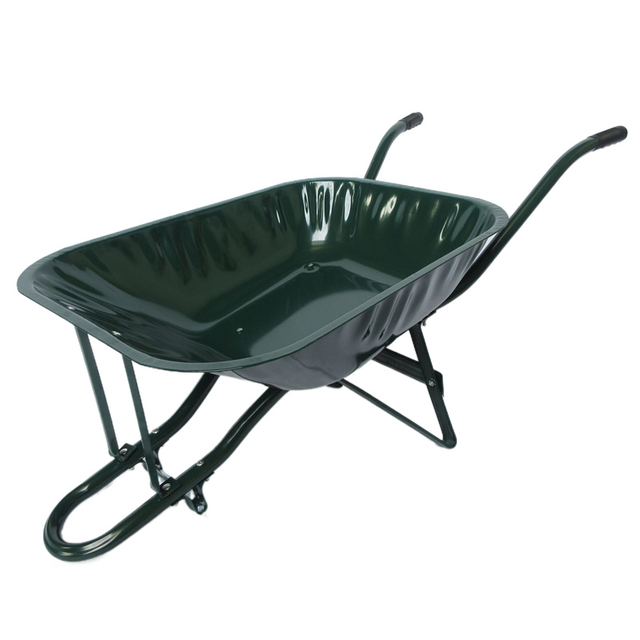
Choosing the right tool for your yard or construction site changes everything. If you pick the wrong one, you end up with a sore back, a broken frame, or a rusted mess in the shed. This Wheelbarrow Buying Guide breaks down the three heavy hitters: Heavy duty steel, Corrosion resistant poly, and space-saving folding models. We focus on helping you match the material to your specific workload so you don't waste money on a tool that can't handle the job.
Introduction to Choosing the Right Wheelbarrows
When you look at wheelbarrows, they might all seem similar at first glance. However, the difference between a professional grade tool and a basic garden cart lies in the material science and engineering. Whether you are hauling wet concrete, jagged rocks, or light mulch, the tray material dictates how long the tool lasts and how much effort you spend pushing it.
In this guide, we dive deep into the "Steel vs. Poly vs. Folding" debate. We evaluate these wheelbarrows based on durability, weight capacity, and ease of storage. By the end, you will know exactly which model fits your lifestyle, ensuring your investment pays off for years to come.
Heavy Duty Steel Wheelbarrows: The Industry Standard for Strength
When people think of professional construction sites, they picture heavy duty steel wheelbarrows. These are the workhorses of the industry. If your daily tasks involve moving sharp rocks, bricks, or hot asphalt, steel is usually the only choice that makes sense. It offers a level of structural integrity that plastic simply cannot match under extreme pressure.
Why Steel Dominates Tough Jobsites
Steel trays are typically made from cold-rolled steel. Manufacturers measure this in "gauge." A lower gauge number means thicker steel. For professional use, you want something between 16 and 20 gauge. They handle the impact of heavy items being dropped into the tray without cracking. If you drop a 50-pound cinder block into a steel tray, it might dent, but it won't shatter.
While they are incredibly strong, heavy duty steel models require more maintenance. They are prone to rust if the paint chips and you leave them out in the rain. To prevent this, many high-end wheelbarrows use powder-coated finishes. These coatings provide a tougher barrier than standard spray paint. Additionally, steel is heavy. If you have to navigate steep hills, the dead weight of the tool itself adds to your fatigue.
Feature | Steel Specification | Benefit |
Durability | High Impact Resistance | Handles rocks, concrete, and metal debris |
Weight | 45 - 75 lbs | Provides stability for top-heavy loads |
Lifespan | 10+ Years (if maintained) | Excellent long-term ROI for contractors |
Maintenance | Paint touch-ups required | Prevents oxidation and structural failure |
Best Use Cases for Steel
Masonry and Concrete Work: They resist the chemical abrasion of cement.
Demolition: They can handle jagged wood and metal scraps.
Heavy Landscaping: Ideal for moving large boulders or heavy root balls.
We recommend looking for models with reinforced undercarriages. A strong tray is useless if the legs buckle under a high-capacity load. Always check the welding points; they should be smooth and continuous, not "tacked" on.
Corrosion Resistant Poly Wheelbarrows: The Modern Gardener’s Choice
In recent years, corrosion resistant poly models have taken over the residential market. These wheelbarrows use high-density polyethylene (HDPE) or similar plastics. They solve the biggest problem associated with metal: rust. For homeowners who might leave their tools outdoors or deal with wet materials like manure and compost, poly is a game-changer.
Understanding Poly Material Science
Poly isn't just "plastic." Professional poly trays are thick and UV-stabilized. This means they won't become brittle and crack after sitting in the sun for a few summers. Because the material is flexible, it can "bounce back" from some impacts that would permanently dent a steel tray. It is also significantly lighter, making it easier for seniors or hobbyist gardeners to maneuver around tight flower beds.
The Advantage of High Capacity and Low Weight
Because the tray is lighter, manufacturers can design high capacity models that hold 8 to 10 cubic feet without making the tool impossible to push. A steel version of that size would be dangerously heavy for one person. Furthermore, many poly models feature a "dump" design or a curved lip that makes pouring liquids or mulch much cleaner.
Key Benefits of Poly:
Chemical Resistance: They won't react to fertilizers or acidic soil.
Easy Cleaning: Simply hose it out; no need to worry about drying it perfectly.
Quiet Operation: They don't rattle or clang like metal when moving over gravel.
However, keep in mind that corrosion resistant poly can fail in extreme cold. If you live in a climate where temperatures drop well below freezing, the plastic can become brittle. Impact during these times might lead to a catastrophic crack that is nearly impossible to repair. For most temperate climates, though, it is the most user-friendly option.
Folding Wheelbarrows: Maximum Efficiency for Small Spaces
Not everyone has a massive barn or a double garage. For urban gardeners or people with limited storage, folding wheelbarrows offer a brilliant solution. While they aren't meant for mixing concrete, they are surprisingly capable for routine yard maintenance.
Structural Design and Portability
These models usually feature a canvas or heavy-duty fabric "tray" supported by a collapsible steel or aluminum frame. They fold flat, allowing you to hang them on a wall or slide them behind a workbench. Despite their "lightweight" appearance, many can still handle 150 to 250 pounds of material.
Why Use a Folding Model?
Transport: They fit easily in the trunk of a car for community garden plots.
Ergonomics: Most are designed with a low center of gravity to prevent tipping.
Light Duty Focus: Perfect for moving bags of soil, leaves, or garden clippings.
The main drawback is durability. You cannot haul sharp rocks or heavy gravel in a fabric tray. It will tear. Also, the folding mechanism introduces more moving parts, which are potential points of failure over time. We suggest these for users who prioritize convenience and have lighter hauling needs.
Tire Technology: Flat Free Tire vs. Pneumatic Options
The tray material is only half the story. The wheel dictates how the wheelbarrows handle different terrains. A flat tire is the number one reason these tools get abandoned in the shed.
The Case for the Flat Free Tire
A flat free tire is made of solid polyurethane foam. It feels like air-filled rubber but can never go flat. You can roll over nails, thorns, and sharp rocks without a care. For most homeowners and professional contractors alike, this is the gold standard because it eliminates maintenance. You never have to look for a bike pump before starting your yard work.
Pneumatic (Air-Filled) Pros and Cons
Pneumatic tires offer a "cushioned" ride. They bounce slightly, which makes them easier to push over bumpy or soft ground. If you are moving a very heavy load over mud, an air-filled tire can be slightly wider, providing better "floatation." However, they leak air over time and are vulnerable to punctures.
Comparison Table: Tire Types
Tire Type | Best For | Maintenance Level | Durability |
Flat Free Tire | Everything / Construction | Zero | High |
Pneumatic | Soft Soil / Mud | High (Requires air) | Moderate |
Dual Wheel | Heavy, Unstable Loads | Moderate | High Stability |
If you are buying a professional model, we strongly suggest looking for a flat free tire setup. It saves hours of frustration over the life of the tool.
Capacity and Volume: Matching the Load to the Task
When we talk about high capacity, we are referring to how much volume the tray can hold. This is usually measured in cubic feet. Understanding your workload prevents you from buying a tool that is either too small (requiring too many trips) or too large (too heavy to lift).
Standard Volume Ranges
4 to 5 Cubic Feet: This is the standard "homeowner" size. It is perfect for mulch, a few bags of soil, or garden debris.
6 Cubic Feet: The most common professional size. It strikes a balance between volume and maneuverability.
8 to 10 Cubic Feet: These are high capacity models. They are usually poly and often feature two wheels for stability. Use these for light but bulky materials like hay, dry leaves, or wood chips.
Weight Capacity vs. Volume
Don't confuse volume with weight. A 6-cubic-foot poly tray might be rated for 300 pounds, while a 6-cubic-foot heavy duty steel tray might be rated for 600 pounds. Always check the manufacturer's weight rating. Overloading a tray can cause the handles to snap or the tire to deform. If you find yourself consistently moving heavy items like wet sand, go with the smaller-volume but higher-weight-rated steel model.
Ergonomics and Handle Design: Protecting Your Back
A poorly designed handle makes even a light load feel heavy. Wheelbarrows are essentially levers. The length and shape of the handles determine how much force you have to apply to lift the load.
Wood vs. Steel vs. Composite Handles
Wood (Hardwood): Traditionally preferred by many because it has a natural "flex" that absorbs shock. It doesn't get as hot in the sun or cold in the winter. However, it can rot or splinter if not stored properly.
Steel: Very strong and usually integrated into the frame. These are found on most heavy duty steel models. They are durable but can vibrate more and feel harsh on the hands.
Composite/Plastic: Often found on modern corrosion resistant poly models. They are lightweight and weatherproof but may feel "flimsy" under extreme weight.
Handle Shapes
Look for "loop" handles or ergonomically curved grips. These allow you to change your hand position depending on whether you are pushing, lifting, or dumping. Some professional models now feature "no-slip" rubberized grips which are essential if you are working in rainy conditions or with sweaty hands.
Stability: One Wheel vs. Two Wheel Designs
The classic image of wheelbarrows features a single wheel at the front. This design is built for maneuverability. You can pivot on a dime and navigate narrow planks or tight garden paths. However, it requires the user to balance the load. If the weight shifts to one side, the whole thing can tip over.
The Rise of the Two-Wheel Cart
Two-wheel models (often called garden carts) offer incredible stability. You don't have to balance the load; the two wheels do it for you. This is ideal for:
Users with back or shoulder issues.
Moving high capacity loads of mulch or leaves.
Working on flat, open terrain.
The downside is that they are much harder to turn. You cannot use them on narrow "single-track" paths or through tight gates as easily as a single-wheel professional model. For most construction work, single-wheel remains the standard. For residential gardening, two wheels are often the smarter choice for safety and ease of use.
Maintenance Tips for Longevity
Regardless of whether you choose steel or poly, a little care goes a long way.
Wash it out: Wet soil contains salts and chemicals that can eat through paint or degrade plastic over time.
Check the Axle: A drop of oil on the wheel axle once a season keeps it rolling smoothly.
Store Indoors: Even corrosion resistant poly lasts longer when kept out of direct UV rays and freezing rain.
Tighten the Bolts: The vibrations from moving over rough ground will loosen the nuts and bolts. Check them twice a year to ensure the frame stays rigid.
Conclusion
Finding the best wheelbarrows depends entirely on your specific needs. If you are a contractor or a homeowner with a "rock-heavy" project, go with heavy duty steel. It provides the impact resistance you need. If you are a gardener looking for a lightweight, rust-proof companion, corrosion resistant poly is the clear winner. And for those in apartments or small homes, the folding model offers surprisingly good utility without the storage headache.
Remember to prioritize a flat free tire and check the cubic foot capacity before you buy. A good wheelbarrow shouldn't just move your dirt—it should save your strength and last for a decade.
We are Yongyi Metal, a leading manufacturer specializing in high-quality hauling solutions. With years of expertise in metal fabrication and garden tool engineering, we take pride in our state-of-the-art factory. We focus on producing professional grade equipment that stands up to the toughest conditions. Our facility utilizes advanced production lines to ensure every heavy duty steel tray and corrosion resistant poly component meets international standards. We understand that our customers rely on our products for their livelihoods, which is why we never compromise on material thickness or structural integrity. From the initial design to the final quality check, we are committed to delivering durability and innovation to your doorstep.
FAQ
Q: Can I mix concrete in a poly wheelbarrow? A: Yes, you can. In fact, many professional masons prefer poly because the dried concrete is easier to pop off the smooth plastic surface than it is to scrape off steel. Just be careful not to exceed the weight limit.
Q: Are flat-free tires harder to push? A: On very soft, sandy soil, they can be slightly harder to push because they don't "float" as much as a wide, air-filled tire. However, on hard ground or grass, most users don't notice a difference.
Q: How do I stop my steel wheelbarrow from rusting? A: If the paint scratches, sand the area lightly and apply a rust-inhibiting spray paint immediately. Storing the tool upside down or in a shed also prevents water from pooling in the tray.
Q: What is the best size for a standard backyard? A: A 6-cubic-foot model is usually the "sweet spot." It is large enough to move a full bag of mulch or several shovels of dirt, but small enough to fit through a standard 36-inch garden gate.
Q: Why are some wheelbarrows so much more expensive than others? A: You are paying for the gauge of the steel, the quality of the UV-protection in the plastic, and the hardware. Cheaper models use thin bolts and soft wood handles that snap, whereas a professional model uses grade-8 hardware and reinforced steel frames.

 English
 العربية
 Français
 Русский
 Español
 Português
 Deutsch
 italiano
 日本語
日本語 한국어
한국어 Nederlands
 Tiếng Việt
 ไทย
ไทย Polski
 Türkçe
 አማርኛ
አማርኛ ພາສາລາວ
 ភាសាខ្មែរ
 Bahasa Melayu
 ဗမာစာ
ဗမာစာ தமிழ்
தமிழ் Filipino
 Bahasa Indonesia
 magyar
 Română
 Čeština
 Монгол
 қазақ
қазақ Српски
 हिन्दी
 فارسی
فارسی Kiswahili
 Slovenčina
 Slovenščina
 Norsk
Norsk Svenska
 українська
 Ελληνικά
 Suomi
Suomi Հայերեն
 עברית
עברית Latine
 Dansk
Dansk اردو
اردو Shqip
Shqip বাংলা
বাংলা Hrvatski
 Afrikaans
 Gaeilge
 Oʻzbekcha
 isiZulu