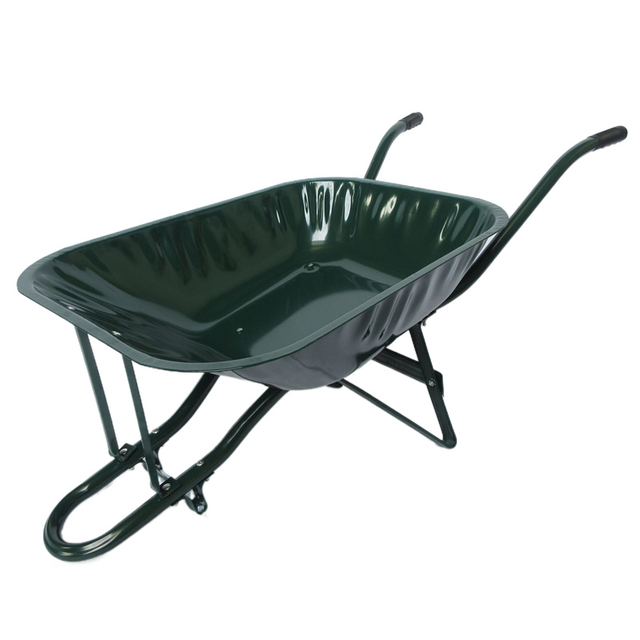
Choosing the right equipment for your yard or construction site often feels like a balancing act—literally. When you look at Wheelbarrows, the most fundamental choice starts with the number of wheels. Should you go with the classic single-wheel design, or is the added stability of a dual-wheel model worth it? This guide dives deep into the "Two-Wheel vs. One-Wheel" debate to help you decide which tool fits your specific physical needs and project goals.
Introduction: The Great Wheel Count Debate
The humble Wheelbarrows are the backbone of any serious landscaping or DIY project. Whether you are hauling mulch, mixing concrete, or moving heavy stones, the efficiency of your workflow depends on how well you can navigate your terrain.
For decades, the single-wheel version reigned supreme because of its agility. However, as modern engineering introduced Professional grade materials and better weight distribution, two-wheel models have gained massive popularity. We are going to look at weight capacity, maneuverability, and durability to see which one earns a permanent spot in your shed. By the end of this article, you will know exactly which configuration will save your back and speed up your chores.
Maneuverability and Terrain Navigation: The Single-Wheel Advantage
When we talk about agility, the single-wheel design wins every time. It features a pivot point right at the front, allowing it to turn on a dime. If your garden has narrow paths, tight corners, or dense plantings, wheelbarrows with one tire are your best friend.
Why Agility Matters for Landscaping
A single-wheel unit acts like an extension of your body. Because it has only one contact point with the ground, you can tilt it side-to-side to navigate along a narrow plank or weave through a crowded flower bed. This is essential for Professional landscapers who work in established gardens where space is a premium.
Handling Uneven Ground
Think about a rocky slope or a path filled with roots. A single-tire model allows you to pick the exact "line" of travel. You can steer it around a large stone that would otherwise catch one side of a two-wheel axle. They often come equipped with a Flat free tire today, meaning you won't have to worry about sharp rocks or nails ending your workday early.
Feature | Single-Wheel Performance |
Turning Radius | Zero-turn capability; pivots on the spot. |
Path Width | Can navigate paths as narrow as the tray itself. |
Sloped Terrain | Easier to keep level on side-hills by tilting handles. |
Obstacle Clearing | Highly precise; can "snake" through debris. |
However, this agility comes with a trade-off: balance. You are the one keeping it upright. If the load shifts, you have to use your core and arms to prevent a spill. It requires more physical engagement than its two-wheeled cousin.
Stability and Weight Distribution: Why Two Wheels Often Rule
If you have ever felt a Heavy duty steel wheelbarrow start to tip over while full of wet soil, you know the panic of trying to save the load. This is where two-wheel Wheelbarrows shine. They offer a stable platform that stays level even when you aren't holding the handles.
Reducing Physical Strain
With two wheels, the side-to-side balance is handled by the machine, not your muscles. This makes them the "gold standard" for anyone concerned about back strain or wrist fatigue. Because the axle is wider, the center of gravity is spread out. You can walk with a more natural gait without constantly micro-adjusting your grip to keep the tray level.
High Capacity Hauling
When you are moving massive loads, stability is safety. A High capacity dual-wheel model can often carry 8 to 10 cubic feet of material without feeling "top-heavy."
Ease of Use: Great for seniors or people with limited upper body strength.
Dump Control: While harder to maneuver, they are much more stable during the initial lift.
Static Stability: You can leave them parked on a slight incline without them flopping over.
We often recommend these for large, flat properties. If you have a massive lawn and need to move cords of wood or bags of mulch over long distances, the stability of two wheels makes the journey much less exhausting. They act more like a cart and less like a balancing toy.
Comparing Tray Materials: Corrosion Resistant Poly vs. Heavy Duty Steel
Regardless of how many wheels you choose, the tray material dictates the lifespan of your Wheelbarrows. We generally see two main contenders in the market: poly and steel.
The Case for Corrosion Resistant Poly
For most homeowners, Corrosion resistant poly is the winner. It is lightweight, which offsets the added weight of a second wheel if you go that route.
Weather Proof: It won't rust if you leave it out in the rain.
Impact Resistant: Modern plastics are incredibly tough and won't dent if you drop a heavy rock in them.
Chemical Resistance: If you are mixing fertilizers or acidic soil amendments, poly handles it without degrading.
The Power of Heavy Duty Steel
For the Professional contractor, Heavy duty steel is still the industry standard. It can handle the heat of hot asphalt and the abrasive nature of jagged concrete chunks. However, steel requires maintenance. If the paint chips, it will rust.
In the "Two-Wheel vs. One-Wheel" context, a steel two-wheel model is a beast—perfect for moving stones but very difficult to push uphill due to its sheer mass. A poly one-wheel model is the "featherweight" option, perfect for quick garden tasks.
To really answer "Which is better?", we need to look at specific scenarios. Not all jobs are created equal.
Construction and Demolition
If you are ripping out a bathroom or moving bricks, go for a Professional one-wheel steel model. Why? Because construction sites are often cluttered. You need to navigate between wall studs and over debris. The single Flat free tire ensures you never get stuck with a puncture mid-job.
Gardening and Mulching
For spreading mulch across a large suburban lawn, a High capacity two-wheel poly model is superior. You can fill it to the brim, and it won't tip over as you walk across the grass. It leaves less of a "rut" because the weight is distributed over two tires instead of one.
Farm and Stable Work
Moving hay or cleaning stalls is a daily grind. A two-wheel Corrosion resistant poly unit is ideal here. It stays stable while you fork material into it, and the poly won't react with animal waste, which is notoriously corrosive to metal.
Project Type | Recommended Config | Why? |
Mixing Concrete | Single-Wheel Steel | Easy to pour/tilt into forms. |
Moving Mulch | Two-Wheel Poly | Stability over long distances; lightweight. |
Rock/Stone Work | Single-Wheel Steel | Precision placement is key. |
General Yard Cleanup | Two-Wheel Poly | Easy for all family members to use. |
Maintenance and Durability: Longevity of Your Equipment
Investing in Wheelbarrows is a long-term decision. You want a tool that lasts a decade, not a season.
Tire Maintenance
The biggest failure point is the tire. Traditional pneumatic tires offer a cushioned ride but go flat at the worst times. We highly suggest looking for a Flat free tire. These are made of solid polyurethane foam. They feel like air-filled tires but can't be punctured.
Single Wheel: If the tire goes flat, the tool is useless.
Two Wheels: If one goes flat, you might be able to limp back to the shed, but the strain on the axle increases significantly.
Frame and Handle Integrity
Look for reinforced frames. Professional models often feature "shoes" or wear strips on the bottom of the legs. Since you drag these legs across the ground when stopping, they eventually thin out. Steel frames should be powder-coated to prevent the "legs" from rusting through.
Storage Considerations
This is one area where the one-wheel model wins again. It has a narrower profile. You can hang a single-wheel unit on a wall or tuck it into a narrow corner of the garage. Two-wheel models have a wider axle that takes up significantly more floor space. If you have a small shed, measure before you buy a High capacity dual-wheel unit.
Ergonomics and User Safety: Protecting Your Body
Safety is often overlooked until something goes wrong. Wheelbarrows are responsible for thousands of strained muscles and pinched fingers every year.
Lifting Mechanics
When you lift a one-wheel model, you are doing more than just lifting the weight; you are balancing it. This engages your obliques and forearms. If the load is off-center, you risk a wrist sprain. Two-wheel Wheelbarrows allow you to lift straight up using your legs. Since the side-to-side balance is fixed, you can focus entirely on the forward momentum.
Dumping Logic
Dumping a load is actually easier with a single wheel. You can tip it forward and to the side to "aim" the material. With two wheels, you can really only tip it straight forward. If you need to dump dirt into a specific post hole, the single wheel is much more accurate.
Grip and Handle Length
Longer handles provide more leverage. Whether you choose one or two wheels, ensure the handles are long enough that you aren't hitting your shins against the tray or the wheels while walking. Rubberized grips are a must for Professional use to prevent blisters during long hours of hauling.
Conclusion: The Verdict on Which Is Better
So, which is better? It depends on your "where" and "what."
Choose a One-Wheel Wheelbarrow if:
You have a hilly or obstacle-filled yard.
You are a Professional who needs to navigate tight construction spaces.
You value precision dumping and extreme maneuverability.
You have limited storage space.
Choose a Two-Wheel Wheelbarrow if:
You have a large, relatively flat property.
You are moving High capacity loads like mulch or leaves.
You want to minimize physical strain and maximize stability.
You are concerned about the tool tipping over on uneven grass.
Ultimately, both are essential tools. Many serious gardeners eventually find they need both: a nimble single-wheel for the flower beds and a stable two-wheel for the heavy hauling.
Frequently Asked Questions (FAQ)
Q: Can I convert a one-wheel wheelbarrow to a two-wheel one? A: Some brands sell conversion kits, but usually, it is cheaper and safer to buy the specific model you need. The frames are balanced differently for one vs. two wheels.
Q: Is steel better than poly for heavy rocks? A: Yes. While Corrosion resistant poly is tough, sharp jagged rocks can eventually scratch or crack plastic over years of heavy use. Heavy duty steel is better for impact loads.
Q: What is the best tire type for thorns? A: Always go for a Flat free tire. It uses solid foam, so thorns, nails, and glass won't cause a flat.
Q: Why do professional contractors use single wheels? A: Because they often work on "rough grade" sites where the ground is a mess. A single wheel allows them to navigate narrow paths and planks that a two-wheel axle couldn't fit on.
At Yongyi Metal, we don't just sell Wheelbarrows; we engineer them. We operate a massive, state-of-the-art factory where we control every step of the process—from the initial steel press to the final powder coating. I am proud to say that our facility is one of the most advanced in the industry, focusing on Professional grade equipment that stands up to the toughest environments.
We understand that a wheelbarrow is an investment in your productivity. That is why we prioritize features like High capacity trays, Corrosion resistant poly, and Flat free tire technology. We have spent years listening to feedback from both home gardeners and industrial contractors to refine our designs. When you choose a product from our factory, you are getting the result of rigorous testing and a commitment to durability. We don't cut corners because we know that out in the field, your equipment simply has to work. Whether you need a Heavy duty steel model for a construction site or a lightweight poly one for your backyard, we have the manufacturing strength to deliver the best-performing tools on the market.

 English
 العربية
 Français
 Русский
 Español
 Português
 Deutsch
 italiano
 日本語
日本語 한국어
한국어 Nederlands
 Tiếng Việt
 ไทย
ไทย Polski
 Türkçe
 አማርኛ
አማርኛ ພາສາລາວ
 ភាសាខ្មែរ
 Bahasa Melayu
 ဗမာစာ
ဗမာစာ தமிழ்
தமிழ் Filipino
 Bahasa Indonesia
 magyar
 Română
 Čeština
 Монгол
 қазақ
қазақ Српски
 हिन्दी
 فارسی
فارسی Kiswahili
 Slovenčina
 Slovenščina
 Norsk
Norsk Svenska
 українська
 Ελληνικά
 Suomi
Suomi Հայերեն
 עברית
עברית Latine
 Dansk
Dansk اردو
اردو Shqip
Shqip বাংলা
বাংলা Hrvatski
 Afrikaans
 Gaeilge
 Oʻzbekcha
 isiZulu