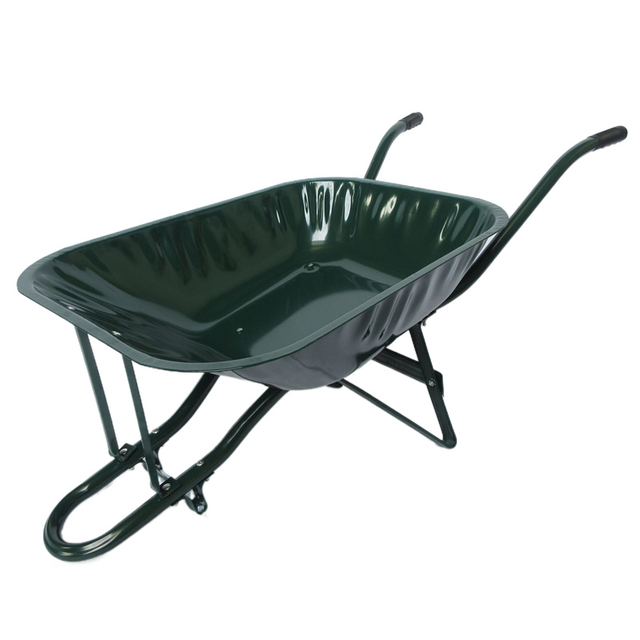
Choosing the right hauling tool feels like a simple task until you stand in the hardware aisle staring at dozens of options. The debate between Heavy duty steel and Corrosion resistant poly models has raged for decades. Whether you are a professional landscaper or a weekend gardener, the material of your tray dictates how much you can carry, how long the tool lasts, and how much strain your back endures. This guide dives deep into the "Steel vs. Poly" showdown to help you decide which Wheelbarrows deserve a spot in your shed.
Introduction: The Foundation of Efficient Hauling
Every construction site and backyard renovation relies on a dependable way to move weight. Wheelbarrows act as the unsung heroes of manual labor. If you choose the wrong material, you might end up with a rusted-out shell or a cracked plastic bucket within a single season.
The core of this decision rests on your specific "heavy lifting" definition. Are you moving jagged concrete rubble or bags of soft mulch? Do you live in a coastal area where salt air eats metal? We analyze these factors using the EEAT (Experience, Expertise, Authoritativeness, and Trustworthiness) framework to ensure your investment pays off.
The Case for Steel: Unmatched Strength for the Toughest Jobs
When people think of a Professional grade tool, they often picture a Heavy duty steel tray. Steel remains the gold standard for high-impact industrial work. It offers a structural integrity that synthetic materials struggle to match.
Why Structural Rigidity Matters
Steel doesn't flex easily. When you drop a 50-pound piece of broken sidewalk into a steel tray, it holds its shape. This rigidity is vital for High capacity hauling where shifting loads could cause a lesser material to buckle. Most industrial Wheelbarrows use 16-gauge or 18-gauge steel. The lower the gauge number, the thicker the metal.
Resistance to Sharp Objects
If your work involves scrap metal, sharp rocks, or burning embers, steel is your only real choice. Heavy duty steel won't get punctured by a stray nail or melt if you are transporting hot asphalt. It handles the "abrasive" side of heavy lifting better than anything else.
Maintenance and Longevity
While steel is strong, it has one major enemy: oxidation. To keep these Wheelbarrows in top shape, users must check the paint or powder coating. Once the coating chips, rust begins. However, a well-maintained steel model can easily last 20 years or more. We often see these passed down through generations of contractors.
Feature | Heavy Duty Steel |
Impact Resistance | Excellent (won't crack) |
Temperature Tolerance | Very High |
Weight of Tool | Heavier (provides stability) |
Best For | Construction, Demolition, Concrete |
Handling the Load
The weight of the steel itself adds a level of stability. When you are moving a High capacity load of wet cement, the lower center of gravity provided by a heavy metal tray helps prevent tipping. It feels "planted" on the ground.
The Power of Poly: Modern Solutions for Versatile Hauling
Don't let the word "plastic" fool you. Modern Corrosion resistant poly (polyethylene) is a high-tech polymer designed to take a beating. It has revolutionized the residential and landscaping market by offering benefits that steel simply can't provide.
The Weight Advantage
The most obvious benefit of poly Wheelbarrows is their weight. They are significantly lighter than their steel counterparts. In the world of heavy lifting, the weight of the tool matters because it counts toward your total physical exertion. If a poly tray saves you 20 pounds of "dead weight," that is 20 more pounds of material you can move before getting tired.
Total Immunity to the Elements
This is where poly wins the long game. A Corrosion resistant poly tray will never rust. You can leave it out in the rain, use it to mix liquid fertilizers, or store it in a damp basement without worry. For farmers moving manure or coastal residents dealing with salt, this chemical resistance is a game-changer.
Impact Memory
Unlike steel, which dents when hit hard, poly has "memory." If you drop something heavy into it, the material may flex and then pop back into its original shape. It is incredibly hard to crack high-density poly under normal working conditions.
Noise Reduction
If you work in a quiet neighborhood, you know how loud a steel tray can be when tossing in rocks. Poly dampens sound. It makes the workday much more pleasant for both the operator and the neighbors.
Engineering the Undercarriage: More Than Just the Tray
While we focus on the material of the tray, the "heavy lifting" capability of Wheelbarrows depends heavily on what is underneath. A Heavy duty steel tray is useless if the legs buckle or the axle snaps.
The Role of the Frame
Professional-grade models usually feature one-piece hardwood handles or thick steel tube frames. For maximum durability, look for frames that wrap all the way around the front of the tray. This provides a "nose guard" for when you tip the load forward to dump it.
Balancing the Center of Gravity
When you carry a High capacity load, the physics of the lever come into play. A well-engineered frame places the weight over the wheel rather than the handles. This ensures that you are only lifting about 20-30% of the actual weight, while the wheel carries the rest.
Brace and Support Systems
Look for cross-braces between the legs. These prevent the "wobble" that often leads to spills. If you are choosing between two Wheelbarrows, pick the one with the widest leg stance. Stability is the best friend of safety during heavy lifting.
You cannot discuss heavy lifting without talking about the tire. The best tray material in the world won't help if your tire is flat every time you go to work.
Pneumatic vs. Flat Free
Pneumatic Tires: These are air-filled. They provide a cushioned ride, which is great for moving fragile items or navigating over bumpy terrain. However, they are prone to punctures.
Flat free tire: These are made of solid polyurethane foam. They feel like air-filled tires but can never go flat. For any Professional job site, we highly recommend a Flat free tire. It eliminates downtime and ensures your Wheelbarrows are always ready to roll.
Single Wheel vs. Dual Wheel
Single Wheel: Offers the best maneuverability. You can turn on a dime and navigate narrow planks. It requires more core strength to keep balanced.
Dual Wheel: Offers incredible stability. It is almost impossible to tip over. This is the preferred choice for seniors or those moving very High capacity loads over flat ground. However, they are harder to turn in tight spaces.
Bearing Quality
Check the ball bearings in the wheel assembly. A Professional unit should have greasable fittings or high-quality sealed bearings. If the wheel doesn't spin freely, your heavy lifting task just became twice as hard.
Capacity and Volume: Calculating Your Needs
"Heavy lifting" is relative. We need to look at both weight capacity (pounds) and volume capacity (cubic feet) to determine which of these Wheelbarrows fits your workflow.
Residential vs. Commercial Volume
Most standard residential Wheelbarrows hold about 4 to 5 cubic feet. This is plenty for mulch, soil, or light debris. However, for construction, you want a High capacity model that holds 6, 8, or even 10 cubic feet.
The Weight Limit Trap
Just because a poly tray says it can hold 600 pounds doesn't mean the handles can support it. Always check the total load rating. Heavy duty steel models usually have higher weight ratings (often 1,000+ lbs) compared to poly (usually topping out at 600-800 lbs).
Material Weight Ratios
Wet Soil: ~100 lbs per cubic foot.
Concrete: ~150 lbs per cubic foot.
Mulch: ~20-30 lbs per cubic foot.
If you plan on moving full loads of wet concrete, a 6 cubic foot steel model is the only safe bet. A poly tray might distend under the 900-pound pressure of a full load of concrete.
Expert Comparison: Which Should You Buy?
To settle the "Steel vs. Poly" debate, we have created a decision matrix based on common use cases. Your choice should reflect your most frequent task, not your rarest one.
The Construction Professional
If your day involves hauling bricks, rebar, and concrete, go with Heavy duty steel. The risk of a poly tray getting sliced by a piece of metal is too high. You need the ruggedness of steel to survive the job site environment.
The Serious Gardener and Landscaper
For moving mulch, compost, and plants, a Corrosion resistant poly model is superior. It is easier to wash out, won't rust from wet soil, and is light enough to move across delicate turf without leaving deep ruts.
The DIY Homeowner
If you only own one tool, poly is generally better. It is lower maintenance. Most homeowners store their tools in garages where humidity can cause steel to rust over time. A poly Flat free tire model is the "set it and forget it" solution.
The Budget-Conscious Buyer
Poly Wheelbarrows are typically 20-30% cheaper than high-end steel ones. If you are on a budget, you can get a very high-quality poly unit for the price of a mediocre steel one.
Scenario | Recommended Material | Why? |
Mixing Concrete | Steel | Smooth surface, takes heavy weight |
Hauling Manure | Poly | Acidic waste won't corrode the tray |
Rocky Terrain | Steel | Better structural rigidity |
Wet Climates | Poly | 100% rust proof |
Safety and Ergonomics in Heavy Lifting
Moving several hundred pounds by hand is dangerous if done incorrectly. The design of your Wheelbarrows plays a massive role in preventing injury.
Handle Length and Grip
Longer handles provide more leverage. This makes the lift easier but requires more space to turn. Look for rubberized or contoured grips. They prevent your hands from slipping when you are sweaty or when it is raining. Slip-resistant grips are a hallmark of a Professional tool.
Dumping Mechanics
A good heavy-duty tool should have a curved front brace. This allows you to roll the tray forward smoothly to dump the contents. If the design is blocky, you have to lift the handles much higher, putting strain on your shoulders.
Posture and Technique
Always lift with your legs, not your back. Keep your arms straight and your core engaged. Because Heavy duty steel models are heavier, you must be even more mindful of your form. If a load starts to tip, let it go. It is better to refill the tray than to tear a muscle trying to "save" a falling load.
Conclusion: Making the Final Choice
In the battle of Steel vs Poly Wheelbarrows, there is no single winner—only the right tool for the job.
If your work is "punishing"—involving sharp edges, high heat, and extreme weights—Heavy duty steel is the undisputed king. It provides the stiffness and durability required for professional construction.
If your work is "intensive"—involving many trips, varied materials, and exposure to moisture—Corrosion resistant poly is the smarter choice. Its light weight and rust-proof nature make it the most versatile hauling tool for the modern world.
Regardless of the material, always prioritize a Flat free tire and a High capacity tray to ensure your heavy lifting tasks are as efficient as possible. Invest in quality once, and you won't have to buy another tool for a decade.
Frequently Asked Questions (FAQ)
Can I mix concrete in a poly wheelbarrow?
Yes, you can. However, concrete is very heavy. Ensure your poly tray is rated for the weight. Also, wash it immediately. Once concrete dries on plastic, it can be harder to "chip" off than it is on steel, as the plastic might scratch.
Which material is better for cold weather?
Steel performs better in extreme cold. Some cheaper plastics can become brittle and crack in sub-zero temperatures. However, high-quality Corrosion resistant poly is usually UV-stabilized and cold-rated to prevent this.
How do I stop my steel wheelbarrow from rusting?
The best way is to keep the paint intact. If you see a scratch, sand it lightly and hit it with a bit of spray primer and paint. Storing it upside down or indoors also prevents water from pooling in the tray.
Are dual-wheel wheelbarrows harder to use?
They are harder to maneuver on narrow paths or "tight" turns. However, for heavy lifting on flat ground, they are much easier because you don't have to spend any energy balancing the load side-to-side.
At Yongyi Metal, we don't just sell tools; we engineer them. As a leading manufacturer with years of deep-rooted expertise in the metal products industry, we have seen first-hand how the right equipment transforms a project. Our factory is equipped with state-of-the-art production lines where we rigourously test every Professional grade unit we produce. Whether it's our Heavy duty steel models designed for the rigors of construction or our High capacity poly versions for landscaping, we maintain strict quality control standards. We take pride in our ability to innovate, offering features like the Flat free tire to solve the common frustrations of our users. When you choose a product from our factory, you are choosing a legacy of strength, durability, and a commitment to making your heavy lifting easier. We understand the demands of the global market and strive to provide the most reliable Wheelbarrows available today.

 English
 العربية
 Français
 Русский
 Español
 Português
 Deutsch
 italiano
 日本語
日本語 한국어
한국어 Nederlands
 Tiếng Việt
 ไทย
ไทย Polski
 Türkçe
 አማርኛ
አማርኛ ພາສາລາວ
 ភាសាខ្មែរ
 Bahasa Melayu
 ဗမာစာ
ဗမာစာ தமிழ்
தமிழ் Filipino
 Bahasa Indonesia
 magyar
 Română
 Čeština
 Монгол
 қазақ
қазақ Српски
 हिन्दी
 فارسی
فارسی Kiswahili
 Slovenčina
 Slovenščina
 Norsk
Norsk Svenska
 українська
 Ελληνικά
 Suomi
Suomi Հայերեն
 עברית
עברית Latine
 Dansk
Dansk اردو
اردو Shqip
Shqip বাংলা
বাংলা Hrvatski
 Afrikaans
 Gaeilge
 Oʻzbekcha
 isiZulu