Introduction
Moving heavy boxes and equipment is common in warehouses, retail stores, and logistics centers. Workers often rely on simple transport tools to reduce lifting effort and improve efficiency. Two tools are frequently confused: the dolly and the hand trolly. At first glance, they seem similar because both move loads using wheels. However, their structure and working methods are very different. A dolly uses a flat platform to support large or bulky items, while a hand trolly uses an upright frame and leverage to move stacked loads. Understanding these differences helps businesses choose the right equipment for safer and more efficient material handling.
Understanding the Basics of a Dolly and a Hand Trolly
What Is a Dolly in Material Handling?
A dolly is a compact platform equipped with four wheels that support heavy loads directly from underneath. Workers place items on its flat surface and move them across smooth floors with minimal effort. It works well for bulky furniture, machinery parts, and stacked cartons that must remain level during transport. The platform spreads weight across several wheels, helping large items stay balanced while rolling. Because of this stable design, many warehouses use dollies for moving equipment across open areas. Its simple structure allows operators to move large objects without complex mechanisms.
What Is a Hand Trolly?
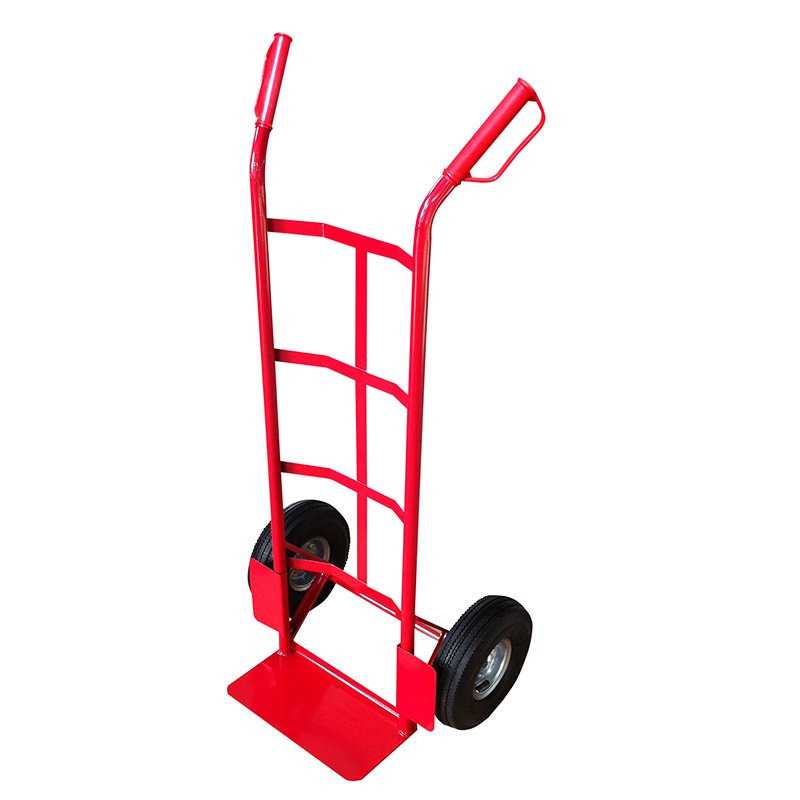
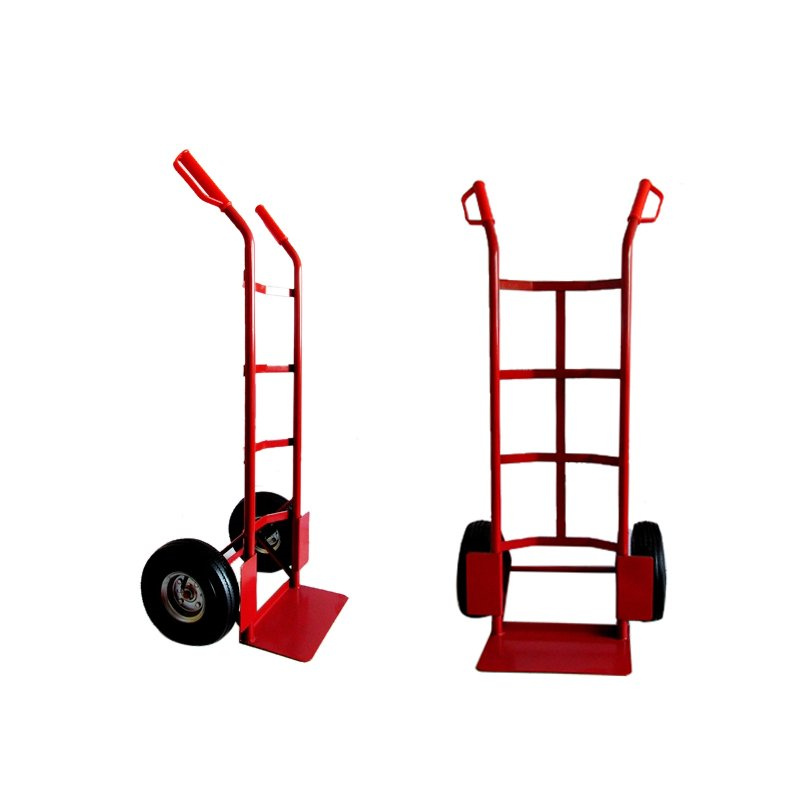
A hand trolly uses a vertical frame, handles, and two wheels to transport heavy objects. At the bottom sits a small metal plate known as a toe plate. Workers slide it under a load, tilt the frame backward, and balance the weight on the wheels. This leverage reduces lifting effort and makes transportation easier. The design allows one person to move stacked boxes or appliances through tight corridors. Because the load leans against the frame, the operator maintains strong control while rolling the equipment.
Why People Often Confuse Dollies and Hand Trolleys
Many people use the words dolly and trolley interchangeably because both tools perform similar tasks. They help transport heavy items without excessive lifting. Their names also sound alike, which adds confusion in everyday conversation. In some regions, the term trolley refers to a shopping cart, while in others it means a hand truck. Despite the shared purpose, the internal design and operation differ clearly. Recognizing these distinctions allows operators to select the correct equipment for each task.
Key Structural Differences Between a Dolly and a Hand Trolly
Platform vs Upright Frame Design
In terms of structure, the difference between a dolly and a hand trolly is very clear. One relies on a flat horizontal platform to carry weight, while the other uses a vertical frame and leverage to move loads. Understanding these structural distinctions helps operators choose the right equipment for warehouse logistics, equipment transport, and delivery operations.
| Comparison Aspect | Dolly (Platform Transport Device) | Hand Trolly (Two-Wheel Hand Truck) |
| Basic Structure | Flat horizontal platform mounted on wheels | Upright L-shaped frame with handles |
| Load Support Method | Load rests fully on the platform surface | Load leans against vertical frame when tilted |
| Platform / Toe Plate Size | Common platform size 457 × 762 mm (18 × 30 in) or 610 × 915 mm (24 × 36 in) | Toe plate typically 180–300 mm wide × 250–350 mm deep |
| Equipment Height | Platform height typically 100–150 mm above ground | Overall height typically 1100–1300 mm |
| Wheel Configuration | Usually 4 casters | Usually 2 main wheels |
| Wheel Diameter | Common caster diameter 75–125 mm (3–5 in) | Wheel diameter typically 200–260 mm (8–10 in) |
| Wheel Types | Swivel casters or fixed casters | Pneumatic rubber wheels or solid rubber wheels |
| Steering Mechanism | Direction controlled by rotating casters | Direction controlled by balancing on two wheels |
| Load Distribution | Weight distributed across four wheels | Weight partially supported by frame |
| Typical Load Capacity | Furniture dolly commonly 450–900 kg (1000–2000 lb) | Standard hand trolly typically 200–300 kg (440–660 lb) |
| Weight Handling Principle | Multi-wheel distribution for stability | Lever principle reduces lifting force |
| Loading Method | Items must be lifted or slid onto platform | Toe plate slides under the load |
| Stability Characteristics | High stability for large flat items | Requires operator control for balance |
| Space Adaptability | Best in open warehouse floors | Ideal for narrow aisles and doorways |
| Typical Applications | Furniture transport, machinery movement, warehouse loads | Parcel delivery, box transport, appliance moving |
| Common Materials | Wood deck, steel frame, plastic or aluminum | Steel or aluminum frame construction |
| Equipment Weight | Usually 7–20 kg | Usually 8–18 kg |
| Operator Requirement | Often 1–2 operators for large loads | Usually single operator |
Tip:When transporting bulky equipment or furniture that must remain level, a dolly provides greater stability. For stacked boxes, appliances, or delivery routes with tight corridors, a hand trolly improves maneuverability and reduces lifting effort.
Wheel Configuration and Movement Mechanics
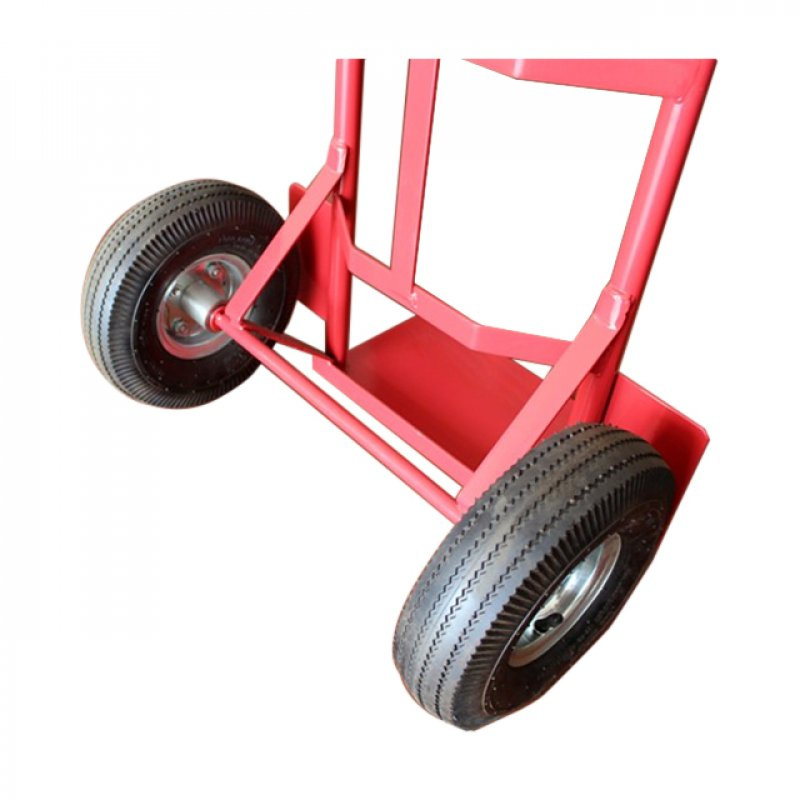
Wheel placement also separates these two devices. Dollies typically have four swivel casters that rotate in different directions. This allows smooth movement across wide spaces and flat floors. A hand trolly, however, usually relies on two larger wheels. Operators tilt the frame to roll the load. The larger wheel size helps navigate ramps, curbs, or uneven ground. Because the device balances on two wheels, workers can pivot quickly while maintaining control of the load.
Handle and Control Mechanisms
Control methods differ as well. Most dollies do not include built-in handles. Workers guide them by pushing the cargo itself or by using optional push bars. A hand trolly always includes handles at the top of the frame. These handles allow operators to steer precisely and apply leverage while tilting the load. The ergonomic grip design reduces strain and improves stability during movement, especially when transporting stacked items.
How a Dolly and Hand Trolly Work in Real Transport Tasks
Loading and Positioning the Cargo
Efficient loading requires proper positioning of the center of gravity. When using a dolly, operators should place the heaviest portion of the load near the center of the platform to distribute weight evenly across the casters. For a hand trolly, the toe plate should slide fully beneath the load before tilting, ensuring the weight rests close to the wheel axle. This positioning reduces strain on the operator and improves stability while lifting the load into a balanced transport position.
Movement and Balance During Transport
Stable movement depends on how weight transfers through the wheels. Dollies maintain a horizontal load position, allowing weight to spread across four casters and keeping vibration low during transport. With a hand trolly, the operator balances the load against the frame while rolling on two wheels. Keeping the load slightly tilted toward the frame improves control and reduces forward tipping, especially when moving stacked boxes or tall equipment.
Typical Work Environments for Each Tool
Transport tools perform best when matched to the physical layout of the workplace. Dollies are widely used in distribution centers with smooth concrete floors and large open spaces where bulky loads must move long distances. A hand trolly is more suitable for environments with frequent turns or vertical transitions, such as delivery trucks, stairways, and narrow aisles. Its upright structure allows operators to move goods through constrained pathways efficiently.
When a Hand Trolly Is the Better Choice
Moving Tall or Stackable Items
Transporting stacked goods requires proper load balance and frame support. A hand trolly allows operators to lean cartons or appliances against the vertical frame so the weight transfers to the wheels rather than the user. For stable movement, the load height should remain below the handle level and centered over the axle. Standard models typically support 200–300 kg, making them suitable for moving multiple cartons or medium appliances efficiently during warehouse picking or delivery operations.
Navigating Tight Spaces and Narrow Paths
Efficient movement in confined areas depends on equipment width and turning radius. A hand trolly usually measures 450–550 mm wide, allowing it to pass easily through standard doorways and narrow warehouse aisles. Because it pivots on two wheels, operators can rotate the load with minimal space compared with four-wheel carts. This maneuverability is particularly useful in retail stockrooms, delivery vehicles, and storage corridors where space is limited.
Transporting Loads Across Uneven Surfaces
Outdoor loading zones and warehouse ramps often include uneven surfaces that challenge standard carts. A hand trolly uses larger wheels—commonly 200–260 mm in diameter—to absorb shocks and maintain traction on rough ground. Pneumatic tires further reduce vibration and help stabilize the load during movement. This wheel design allows operators to roll goods over thresholds, small curbs, or loading ramps while maintaining control and protecting the transported items.
When a Dolly Is the Better Solution
Transporting Large or Bulky Furniture
Furniture handling requires stable support and sufficient platform area. A dolly typically provides a deck height of 100–150 mm, which lowers the center of gravity and improves stability when moving sofas, cabinets, or large desks. Operators should position the heaviest section of the furniture near the center of the platform to prevent uneven wheel loading. Many furniture dollies also include carpeted or rubber edges that protect surfaces from scratches while improving friction between the load and the platform during transport.
Moving Extremely Heavy Loads Safely
Heavy-duty dollies are engineered to move industrial components with minimal manual lifting. Models designed for machinery often support 900–1800 kg, depending on wheel material and frame construction. Polyurethane or steel-reinforced casters help distribute pressure evenly across the floor while reducing vibration during movement. For extremely heavy items, multiple dollies can be placed under different load points so the weight spreads evenly across several wheels. This method increases stability and prevents localized stress on the floor surface.
Handling Loads That Cannot Be Tilted
Certain equipment such as laboratory instruments, server racks, or precision machinery must remain level during relocation. A dolly provides a horizontal platform that maintains the load’s orientation throughout the transport process. Operators often secure these items using ratchet straps or corner braces to prevent shifting during motion. Keeping the center of gravity low and centered on the platform improves control and minimizes vibration, which helps protect sensitive components while moving them across warehouse or facility floors.
Common Types of Hand Trolleys and Dollies
Popular Types of Hand Trolly Designs
Modern hand trolly designs are engineered for specific transport scenarios. Standard two-wheel models are widely used for cartons and appliances, typically supporting loads of 200–300 kg with 200–260 mm wheels for stable movement. Stair-climbing hand trolleys use tri-wheel assemblies that rotate over steps, improving safety on staircases and loading docks. Convertible hand trolleys add folding frames and auxiliary wheels, allowing the unit to switch from vertical handling to a four-wheel platform mode. This design improves load distribution and enables operators to move longer or wider goods in warehouses and delivery operations.
Different Types of Dollies
Dollies are designed for different load types and transport environments. While they all share the same basic platform concept, their structure, wheel configuration, and protective features vary depending on the application. Understanding these variations helps logistics teams select the correct dolly for specific operational needs.
| Dolly Type | Structural Design | Typical Platform Size | Wheel Configuration | Wheel Diameter | Typical Load Capacity | Common Materials | Primary Applications | Key Functional Features | Operational Considerations |
| Furniture Dolly | Rectangular flat platform with carpeted or padded edges | Common sizes 457×762 mm (18×30 in) or 508×762 mm (20×30 in) | Usually 4 swivel casters | 75–100 mm (3–4 in) | Typically 450–680 kg (1000–1500 lb) | Hardwood deck with steel brackets and rubber padding | Moving sofas, cabinets, tables, office furniture | Padded rails prevent scratches; low deck height improves stability | Best used on smooth indoor floors; secure large furniture with straps if needed |
| Platform Dolly | Solid deck platform mounted on steel frame | Typical deck 610×915 mm (24×36 in) or 762×1219 mm (30×48 in) | Usually 2 swivel + 2 rigid casters | 100–150 mm (4–6 in) | Commonly 680–900 kg (1500–2000 lb) | Steel frame with plywood, steel plate, or plastic deck | Warehouse logistics, bulk material transport, equipment handling | Larger deck area allows stacking multiple cartons or containers | Ensure load is centered to prevent caster overload |
| Appliance Dolly | Reinforced vertical frame with extended base plate and straps | Toe plate typically 200–300 mm deep × 300 mm wide | Usually 2 large wheels, sometimes additional stair wheels | 200–260 mm (8–10 in) | Typically 270–360 kg (600–800 lb) | Steel frame with rubber pads and ratchet straps | Transporting refrigerators, washing machines, water heaters | Integrated straps secure tall appliances; padded surfaces protect finishes | Keep load balanced and strap tightly before tilting |
| Heavy-Duty Machinery Dolly | Low-profile steel frame with multiple heavy casters | Platform sizes vary 300–600 mm per module | Often 4–8 heavy-duty casters | 100–150 mm (4–6 in) | Often 1000–4000 kg (2200–8800 lb) depending on model | Forged steel or reinforced steel plate | Moving industrial machines, production equipment, CNC units | Modular systems allow multiple dollies to distribute weight | Use on level surfaces to maintain even load distribution |
| Pallet Dolly | Square steel frame designed to support pallets | Typical size 1200×1000 mm pallet footprint | Usually 4 swivel casters | 125–150 mm (5–6 in) | Typically 900–1200 kg (2000–2600 lb) | Powder-coated steel frame | Warehouse pallet transport without forklifts | Compatible with standard pallet dimensions | Avoid uneven floors to maintain pallet stability |
Tip:For warehouses moving mixed loads, combining platform dollies for boxed goods and appliance dollies for tall equipment can significantly improve transport efficiency and reduce manual handling time.
Specialized Versions for Industrial Applications
Industrial environments often use engineered transport systems designed for higher loads and precision handling. Heavy-duty machinery dollies commonly use hardened steel frames and polyurethane casters to support loads exceeding 1,000–4,000 kg while protecting factory floors. Some industrial carts integrate handle-assisted steering with low-profile platforms, allowing operators to reposition CNC machines or electrical cabinets accurately. In production lines, modular dollies are frequently used in groups to distribute weight evenly across multiple units. This approach improves stability, reduces floor pressure, and ensures safer movement of large mechanical components.
How to Choose Between a Dolly and a Hand Trolly
Evaluate the Size and Shape of the Load
Effective equipment selection starts with measuring load dimensions and weight distribution. A hand trolly works best when loads are vertically oriented and narrow enough to rest securely against the frame. Operators should ensure the load width does not exceed the toe plate by more than 50–100 mm to maintain balance. For flat, wide, or irregular objects such as furniture panels or machinery housings, a dolly provides better support because its platform distributes weight evenly across multiple wheels, reducing tipping risk during transport.
Consider the Workspace and Transport Path
Transport routes strongly influence which tool performs best. In confined environments like loading docks, elevators, or delivery vehicles, a hand trolly offers superior maneuverability due to its narrow width and pivoting motion. Operators can rotate it within tight turning radii and pass through standard 800–900 mm doorways. Dollies are more effective on open warehouse floors where long, straight travel paths are common. Their four-wheel configuration allows stable movement across smooth surfaces while carrying larger loads.
Match the Tool to Operational Efficiency
Operational efficiency improves when equipment aligns with the workflow and load frequency. A hand trolly allows a single operator to transport multiple stacked cartons at once, reducing repeated trips and handling time. In contrast, dollies improve productivity when moving large machinery parts, pallets, or bulky furniture that require stable horizontal support. Selecting the right tool also reduces worker fatigue and improves load control, which helps maintain consistent handling speed in warehouse and logistics operations.
Conclusion
Dollies and hand trolly both help move heavy loads efficiently in warehouses and logistics environments. A dolly provides a wide and stable platform for bulky furniture or machinery, while a hand trolly offers leverage and maneuverability for stacked boxes and narrow spaces. Understanding these differences helps businesses choose the right tool and improve handling efficiency. QINGDAO YONGYI METAL PRODUCTS CO., LTD. manufactures durable material-handling equipment designed for strength, stability, and reliable performance in industrial and commercial applications.
FAQ
Q: What is the main difference between a dolly and a hand trolly?
A: A dolly has a flat platform and four wheels, while a hand trolly uses a vertical frame, toe plate, and two wheels for tilted transport.
Q: When should you use a hand trolly instead of a dolly?
A: A hand trolly works best for stacked boxes, appliances, and narrow aisles where leverage and maneuverability are important.
Q: Can a hand trolly move heavy appliances?
A: Yes. A hand trolly allows operators to tilt and balance refrigerators or washing machines with controlled leverage.
Q: Which tool is better for bulky furniture?
A: A dolly is better because its platform supports large furniture without tilting.
Q: Are hand trolly carts commonly used in warehouses?
A: Yes. A hand trolly is widely used in warehouses and delivery work because it moves stacked loads efficiently.


 English
 العربية
 Français
 Русский
 Español
 Português
 Deutsch
 italiano
 日本語
日本語 한국어
한국어 Nederlands
 Tiếng Việt
 ไทย
ไทย Polski
 Türkçe
 አማርኛ
አማርኛ ພາສາລາວ
 ភាសាខ្មែរ
 Bahasa Melayu
 ဗမာစာ
ဗမာစာ தமிழ்
தமிழ் Filipino
 Bahasa Indonesia
 magyar
 Română
 Čeština
 Монгол
 қазақ
қазақ Српски
 हिन्दी
 فارسی
فارسی Kiswahili
 Slovenčina
 Slovenščina
 Norsk
Norsk Svenska
 українська
 Ελληνικά
 Suomi
Suomi Հայերեն
 עברית
עברית Latine
 Dansk
Dansk اردو
اردو Shqip
Shqip বাংলা
বাংলা Hrvatski
 Afrikaans
 Gaeilge
 Oʻzbekcha
 isiZulu

