Introduction
Moving heavy items is a daily task in warehouses, retail stores, logistics centers, and homes. Carrying boxes or appliances by hand is slow and physically demanding. Over time, repeated lifting may cause fatigue or injury. A Hand Trolly offers a simple and effective solution. With wheels, leverage, and a sturdy frame, it allows one person to move heavy loads with less effort. This tool improves efficiency and reduces manual strain. In this article, you will learn what a Hand Trolly is, how it works, its key components, and where it is commonly used.
What Is A Hand Trolly? Definition, Structure, And Core Purpose
Definition Of A Hand Trolly In Material Handling
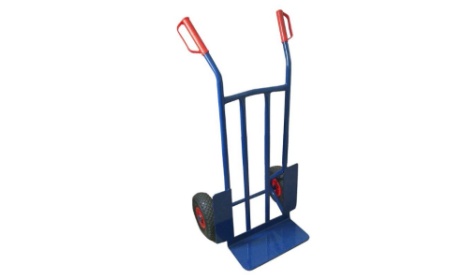
In material handling systems, a Hand Trolly functions as a basic mechanical aid that converts lifting tasks into controlled rolling movement. Its design allows operators to handle loads while maintaining an upright posture, which helps reduce physical strain during repetitive transport tasks. Many industrial models support loads ranging from about 100 to 450 kg depending on frame strength and wheel size. By stabilizing cargo against the vertical frame and distributing weight through the axle, the Hand Trolly enables efficient movement of stacked or bulky items in confined working environments.
Key Structural Components Of A Hand Trolly
In practical use, a Hand Trolly appears simple, but each structural component plays a critical role in safety and performance. Factors such as material strength, wheel size, and structural dimensions directly influence load capacity, maneuverability, and durability. The following table analyzes the key structural components of a Hand Trolly from technical, operational, and application perspectives.
| Component | Structural Description | Common Materials | Typical Dimensions / Technical Specs | Main Function | Typical Applications | Operational Considerations |
| Vertical Frame | L-shaped load-bearing frame connecting handles and base plate | Steel, aluminum alloy, stainless steel | Height: 110–140 cm; tube diameter: 25–38 mm | Supports the load and maintains structural stability during movement | Warehouses, distribution centers, retail logistics | Do not exceed rated capacity to avoid frame deformation |
| Toe Plate (Load Plate) | Flat metal platform located at the bottom of the frame | Cold-rolled steel plate, aluminum plate | Width: 30–40 cm; depth: 18–25 cm; thickness: 3–5 mm | Slides under cargo and supports the base of the load | Carton transport, appliance moving | Keep load center close to the frame for better balance |
| Wheels | Two load-bearing wheels mounted at the bottom sides | Rubber wheels, polyurethane (PU), pneumatic tires | Diameter: 200–260 mm (8–10 in); width: 40–70 mm | Carry most of the load weight and provide rolling mobility | Warehousing, logistics, material transport | Inspect tire wear and bearings regularly |
| Wheel Axle | Steel shaft connecting the two wheels | Carbon steel or alloy steel | Axle diameter: 16–20 mm | Provides rotational support and load distribution for the wheels | Industrial warehouses and logistics operations | Maintain lubrication to reduce friction and wear |
| Handles | Top control bar used to guide and tilt the trolley | Rubber-coated steel or aluminum | Handle width: 45–55 cm | Allows the operator to control direction and balance the load | Delivery services, warehouse handling | Always maintain two-hand grip during operation |
| Load Support Frame | Rear supporting surface where cargo leans during movement | Steel plate or metal mesh panel | Support height: 60–90 cm | Prevents cargo from shifting or falling backward | Box transport, appliance delivery | Stack cargo evenly to maintain stability |
| Fastening Accessories | Optional straps or hooks used to secure cargo | Nylon straps, steel buckles | Typical strap capacity: 300–800 kg | Secures large or unstable loads during transport | Appliance moving, logistics distribution | Check straps and fasteners before use |
Tip:When selecting a Hand Trolly, focus on frame material, wheel diameter, and rated load capacity. Larger wheels (around 250 mm diameter) usually provide better stability and obstacle clearance in warehouse and logistics environments.
Core Purpose Of A Hand Trolly In Everyday Operations
A Hand Trolly is designed to improve efficiency and safety during manual material handling. By transferring load weight to the wheels, it minimizes direct lifting force and reduces strain on the lower back and shoulders. In logistics operations, it allows workers to move multiple packages in a single trip, increasing handling productivity. Proper load placement—keeping heavier items near the frame—helps maintain stability and balance during transport. This simple mechanical advantage supports safer workflows in warehouses, delivery services, retail environments, and household moving tasks.
How A Hand Trolly Works: The Lever Principle Explained
Using Leverage To Move Heavy Loads
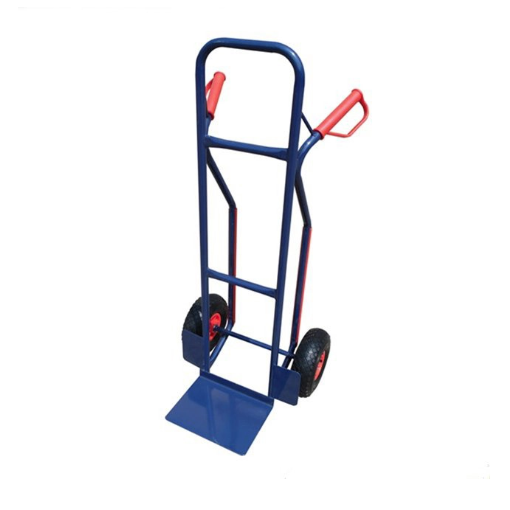
In practical use, the Hand Trolly converts lifting into rotational movement around the wheel axle. When the operator tilts the frame, the load’s center of gravity shifts behind the axle line, transferring most of the weight to the wheels. This reduces the effective force needed from the user. Maintaining proper load alignment along the vertical frame improves stability and prevents side tipping. Operators often keep the load height below shoulder level to maintain visibility and control, ensuring smoother movement and safer handling during heavy material transport.
Step-By-Step Operation Of A Hand Trolly
Proper technique improves both efficiency and safety when operating a Hand Trolly. Before moving, the operator should check that the load base is stable and fully supported by the toe plate. Heavier items should be placed closest to the frame to maintain balance. During movement, maintaining a steady walking speed helps prevent sudden shifts in weight. When approaching slopes or ramps, controlling the tilt angle and keeping the load centered ensures stable motion and prevents unnecessary strain on the operator.
Why The Two-Wheel Design Improves Maneuverability
The two-wheel structure of a Hand Trolly creates a balance point that allows quick directional adjustments during transport. Because the load rests on the axle while tilted, the operator can rotate the trolley with minimal effort. This design reduces friction compared with four-wheel carts, making it easier to reposition loads in tight spaces. The narrow wheel base also helps the trolley pass through standard doorways and storage aisles while maintaining stable vertical support for stacked cargo.
Key Features That Make A Hand Trolly Efficient
Strong Yet Lightweight Construction Materials
Modern Hand Trolly frames are engineered to balance structural strength and manageable weight. Industrial steel models typically use welded tubular frames, which provide high rigidity for repeated heavy-load handling. Aluminum alloy frames reduce overall weight while maintaining adequate load resistance through reinforced joints and crossbars. Protective finishes such as powder coating or anodizing help resist corrosion, abrasion, and environmental exposure. These construction methods ensure long service life while allowing operators to maneuver the trolley efficiently during daily material handling tasks.
High Load Capacity For Industrial Tasks
The load capacity of a Hand Trolly depends on frame design, wheel size, and axle strength. Larger wheels distribute weight more effectively and reduce rolling resistance, which helps maintain stable movement under heavy loads. In industrial environments, reinforced frames and heavy-duty axles enable the trolley to carry stacked cargo safely while maintaining structural integrity. Proper weight distribution—placing heavier items near the frame—improves balance and reduces strain on the operator, allowing efficient transport during warehouse and delivery operations.
Compact And Space-Saving Design
The compact geometry of a Hand Trolly is designed for efficient storage and mobility in confined workspaces. The upright frame keeps the footprint narrow, allowing the trolley to fit easily along walls or inside equipment storage racks. Some designs incorporate foldable toe plates or telescopic handles to further reduce storage dimensions. This compact structure is particularly useful in delivery vehicles and small warehouses, where equipment must be stored without occupying valuable operational space while remaining quickly accessible when needed.
Common Types Of Hand Trolly Used In Different Industries
Standard Upright Hand Trolly
The standard upright Hand Trolly is designed for efficient handling of medium-weight loads in daily operations. Its vertical frame keeps stacked boxes aligned while the toe plate supports the base of the cargo. Most models include wheels with diameters between 200–260 mm, which help reduce rolling resistance and improve maneuverability across warehouse floors. Operators typically position heavier items closest to the frame to maintain a stable center of gravity. This configuration allows smooth transport through narrow aisles, making it suitable for routine logistics and retail restocking tasks.
Appliance Hand Trolly
The appliance Hand Trolly is engineered to safely move bulky household equipment such as refrigerators and washing machines. Reinforced steel frames increase structural rigidity, while protective padding prevents surface damage during transport. Many models include ratchet straps that secure the appliance against the frame, keeping the load stable when tilting or navigating ramps. Larger pneumatic wheels provide better shock absorption and stability when carrying heavy appliances across uneven surfaces, ensuring controlled movement during professional moving or delivery operations.
Convertible Hand Trolly
A convertible Hand Trolly integrates two transport modes into one structure, improving flexibility in dynamic work environments. In upright mode, it functions like a standard two-wheel trolley for stacked loads. When converted into a four-wheel platform configuration, the frame distributes weight evenly across the base, allowing wider or longer cargo to be transported safely. The conversion mechanism typically involves hinged frames or fold-out platforms, enabling operators to switch configurations quickly and adapt the trolley to different material handling requirements.
Main Applications Of A Hand Trolly Across Industries
Warehouse And Logistics Operations
In warehouse logistics, the Hand Trolly improves workflow efficiency by enabling workers to transport multiple cartons in a single trip. Operators often stack boxes vertically against the frame so the load remains aligned with the axle. Maintaining a stable center of gravity helps reduce tipping risks during movement. The trolley is also useful for short-distance transfers between picking zones, packing stations, and loading docks. Because it requires minimal setup, it supports fast-paced warehouse environments where rapid and frequent material movement is essential.
Retail And Distribution Centers
In retail and distribution settings, the Hand Trolly helps streamline inventory movement between storage areas and sales floors. Employees can move several cartons at once while maintaining control in narrow store aisles. Proper stacking—placing heavier products at the bottom and lighter ones on top—helps maintain stability during movement. The trolley also reduces repeated lifting when restocking shelves, which helps lower worker fatigue during long shifts. Its compact size allows efficient movement through doorways, elevators, and stockroom corridors.
Household And Moving Services
During residential moves or home improvement projects, the Hand Trolly simplifies the transport of bulky household items. Movers often secure appliances or stacked boxes against the frame to maintain balance while navigating hallways or ramps. Larger wheels help absorb shocks when crossing door thresholds or outdoor paths. Using a trolley also allows individuals to move heavy items while maintaining a more upright posture, reducing strain on the back and shoulders during lifting and transport tasks.
Hand Trolly Vs. Dolly: Understanding The Difference
Structural Differences Between A Hand Trolly And A Dolly
From a structural engineering perspective, a Hand Trolly and a dolly differ mainly in load orientation and wheel configuration. A Hand Trolly uses a vertical frame and two-wheel axle system, allowing the operator to tilt the load and shift its center of gravity onto the wheels. This lever-based design reduces lifting force and improves maneuverability. A dolly, however, uses a flat platform with four wheels that distribute weight evenly across the base. This structure favors horizontal load placement and provides stable support for wider cargo during movement.
Best Situations For Using A Hand Trolly
A Hand Trolly performs best when moving vertically stacked or tall loads that benefit from frame support. By leaning the cargo against the frame, the center of gravity remains close to the wheel axis, improving stability and control. This configuration allows operators to move goods through narrow aisles, loading docks, and building entrances with minimal turning space. Delivery personnel also benefit from the compact design when navigating corridors, elevators, or stair landings where precise maneuvering and controlled movement are required.
When A Dolly May Be Used Instead
A dolly is more suitable when loads require a wide and stable base for transportation. Its four-wheel platform distributes weight across multiple contact points, which improves stability for large furniture, machinery components, or oversized containers. Because the cargo rests flat rather than leaning against a frame, the center of gravity remains low and evenly balanced. This design works well in open warehouse areas or workshops where there is enough space to maneuver larger loads without tight directional changes.
How To Choose The Right Hand Trolly For Your Needs
Load Capacity And Frame Strength
Load capacity depends largely on frame geometry, material strength, and axle durability. A Hand Trolly with reinforced steel tubing and welded joints can typically support heavier industrial loads, while aluminum frames prioritize portability for frequent handling. Frame thickness, wheel axle diameter, and toe plate strength all influence overall capacity. For stable transport, heavier items should always be placed close to the frame so the center of gravity remains aligned with the wheel axis. This configuration reduces bending stress on the frame and improves control during movement across warehouse floors.
Wheel Type And Terrain Compatibility
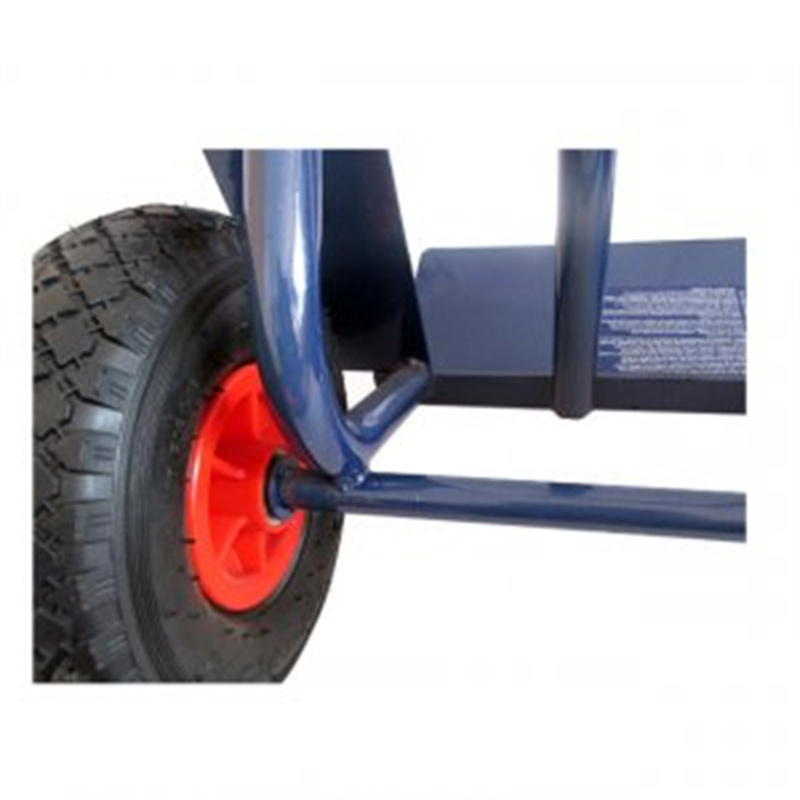
Wheel configuration greatly affects how a Hand Trolly performs in real working environments. Different wheel materials and structures influence load stability, vibration absorption, and maneuverability across various surfaces. Understanding these differences helps operators choose the most suitable wheel type for warehouses, logistics routes, or outdoor delivery conditions.
| Wheel Type | Structural Characteristics | Common Materials | Typical Diameter Range | Typical Load Capacity per Wheel | Terrain Compatibility | Key Performance Advantages | Maintenance Requirements | Operational Considerations |
| Pneumatic Wheel (Air-Filled Tire) | Air-filled tire mounted on metal rim with inner tube | Rubber tire + steel rim | 200–260 mm (8–10 in) | 136–227 kg (300–500 lb) | Gravel, ramps, outdoor pavement, uneven ground | Excellent shock absorption, smooth transport over rough surfaces | Check air pressure regularly (typically 30–50 PSI) | Avoid punctures from sharp objects |
| Solid Rubber Wheel | Solid rubber molded around steel hub | Solid rubber + steel hub | 200–260 mm (8–10 in) | 181–272 kg (400–600 lb) | Smooth indoor floors, warehouse aisles, concrete surfaces | Puncture-proof, highly durable, low maintenance | Minimal maintenance; occasional bearing inspection | Less shock absorption on rough terrain |
| Polyurethane (PU) Wheel | Polyurethane tread bonded to metal or plastic hub | PU elastomer + aluminum or steel hub | 150–250 mm (6–10 in) | 136–227 kg (300–500 lb) | Retail stores, distribution centers, factory floors | Quiet operation, good floor protection, high abrasion resistance | Inspect tread wear over time | Best for smooth industrial flooring |
| Foam-Filled Wheel | Rubber tire filled with polyurethane foam instead of air | Rubber tire + foam core | 200–260 mm (8–10 in) | 136–227 kg (300–500 lb) | Outdoor warehouses, construction areas | Combines shock absorption with puncture resistance | Low maintenance compared with pneumatic tires | Slightly heavier than pneumatic wheels |
| Stair-Climbing Wheel Set | Triple-wheel cluster rotating around a central hub | Rubber or PU wheels + steel hub | Individual wheel diameter 120–160 mm (5–6 in) | Up to 227 kg (500 lb) depending on design | Stairs, curbs, multi-level buildings | Allows smooth stair navigation and obstacle climbing | Inspect rotating hub mechanism regularly | Requires controlled operation for stability |
| Thermoplastic Rubber (TPR) Wheel | Elastic rubber-like tread with plastic core | TPR + polypropylene hub | 150–200 mm (6–8 in) | 113–181 kg (250–400 lb) | Retail, hospitals, office environments | Quiet, non-marking, good floor protection | Low maintenance | Not ideal for heavy industrial loads |
Tip:For warehouse and logistics environments, wheels with 200–260 mm diameter provide a good balance between maneuverability and load capacity. Larger wheels also improve obstacle clearance and reduce effort when transporting heavy loads.
Design Features For Specific Tasks
Different work environments may require specific Hand Trolly features. Foldable models are convenient for delivery drivers who need compact equipment in vehicles. Stair-climbing wheels help transport loads in multi-level buildings. Some industrial models also include protective guards, extended plates, or securing straps. By selecting features that match the intended task, businesses can improve both efficiency and operational safety.
Conclusion
A Hand Trolly is a simple yet powerful tool for moving heavy goods efficiently. By combining leverage, strong wheels, and a stable frame, it allows workers to transport loads with less effort and greater safety. From warehouses and retail stores to delivery services and home moving tasks, the Hand Trolly improves productivity and reduces manual strain. QINGDAO YONGYI METAL PRODUCTS CO., LTD. provides durable and well-designed Hand Trolly solutions, offering strong load capacity, reliable construction, and practical designs that help businesses handle materials more efficiently.
FAQ
Q: What is a hand trolly used for?
A: A hand trolly moves heavy boxes or appliances with less effort.
Q: How does a hand trolly work?
A: A hand trolly uses wheels and leverage to roll loads easily.
Q: Why use a hand trolly instead of lifting?
A: A hand trolly reduces strain and improves transport efficiency.
Q: How much weight can a hand trolly carry?
A: A typical hand trolly carries 100–1000 lb depending on design.
Q: What is the difference between a hand trolly and a dolly?
A: A hand trolly has two wheels and a frame; a dolly has a platform.
Q: How do you choose the right hand trolly?
A: Choose a hand trolly based on load weight, wheel type, and use.


